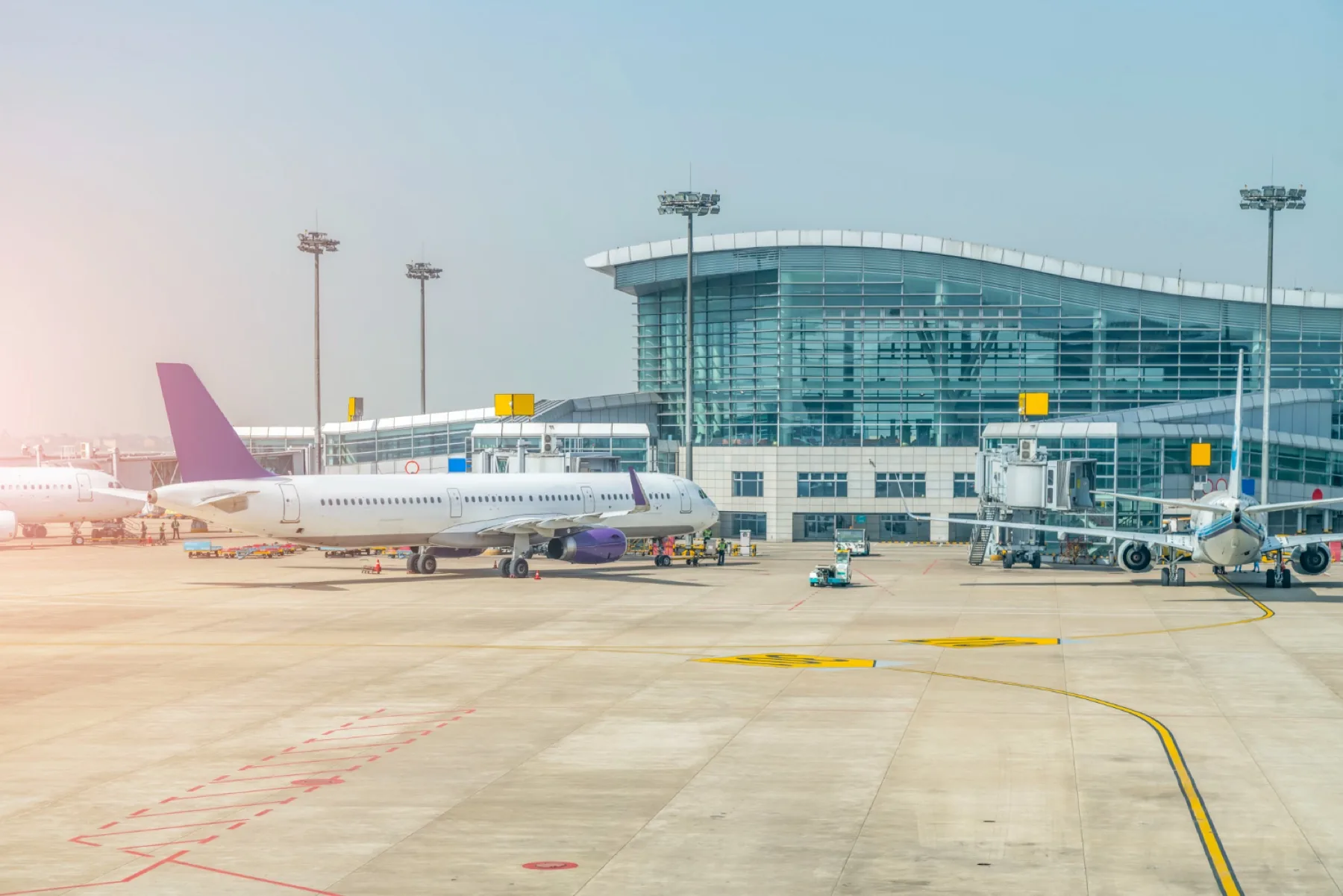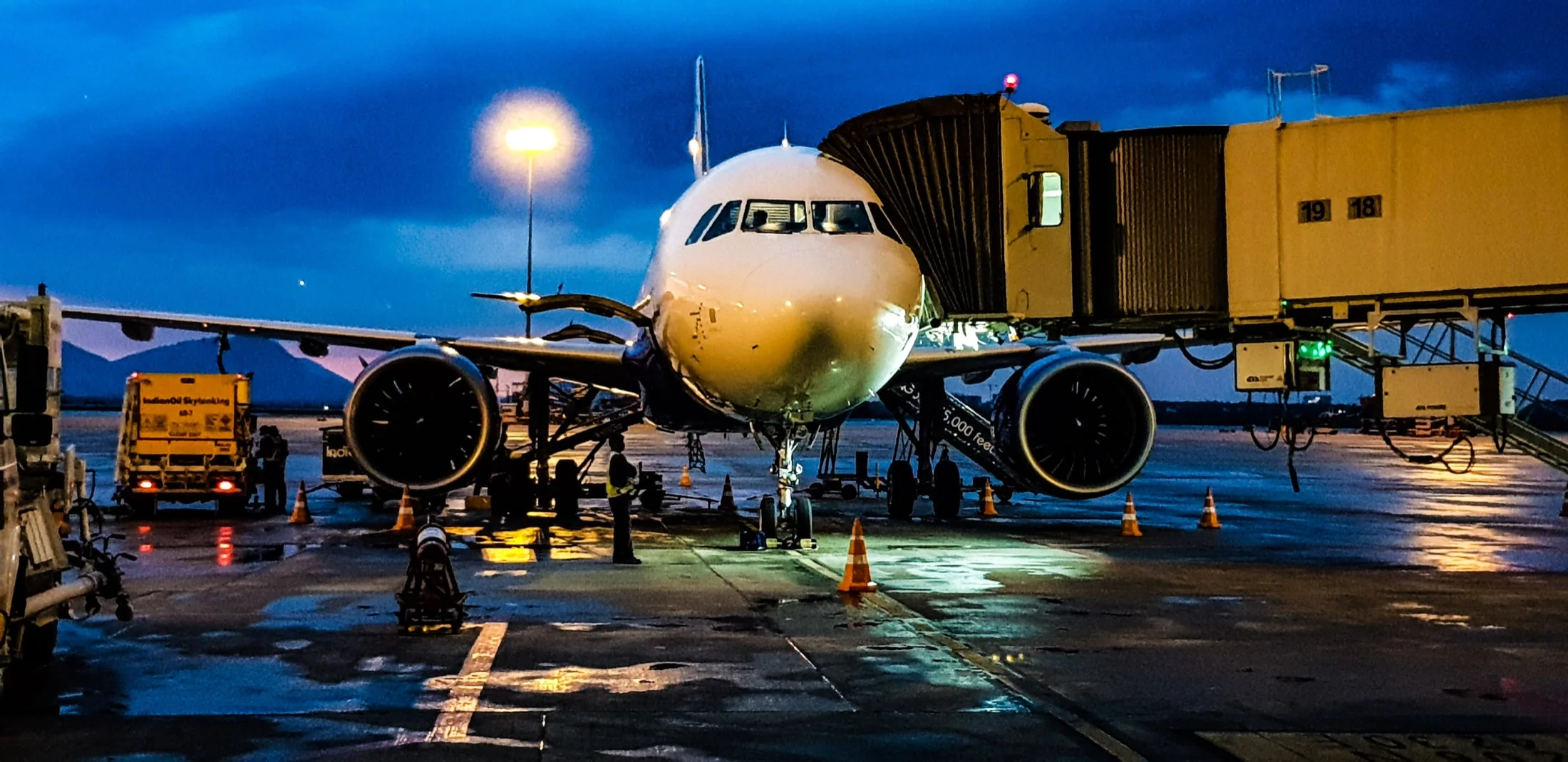
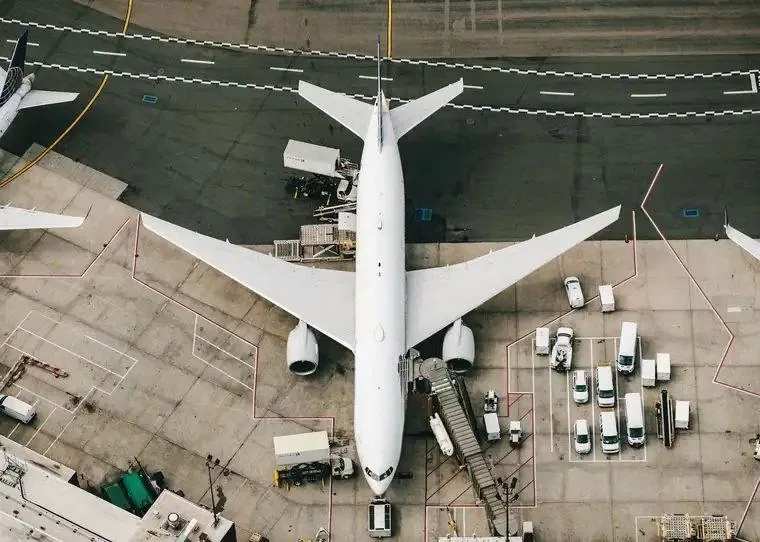
At every landing of a commercial airliner, a mass of 70 to 250 tonnes settles onto three steel legs in a fraction of a second. The kinetic energy dissipated by a long-haul landing gear at touchdown is measured in megajoules; the loads taken by the axles easily exceed a hundred tonnes, and the deceleration imposed on the brakes is such that a carbon disc can climb past 600 °C in a single manoeuvre. This component, paradoxically the most visible part of the aircraft when extended and the most forgotten when stowed in the bay, is also one of the most heavily stressed subsystems of the entire airframe.
For a Part-145 workshop, the landing gear capability constitutes a dedicated industrial milestone. It demands a dedicated hangar, certified hydraulic benches, compliant paint booths, specialised B1 mechanic staff, and above all the mastery of an intervention chain that runs from a simple tire change to the decennial general overhaul — the full strip-down of the gear into several hundred parts, structural NDT, repainting, reassembly, testing and certification for another ten years of service. This article offers a technical reading of that mission, in the Algerian context and against the ANAC Algérie regulatory framework.
1. Landing gear anatomy: NLG, MLG and general architecture
A modern commercial aircraft typically has three landing gear legs: one NLG (Nose Landing Gear) and two MLG (Main Landing Gear) — or more on the largest aircraft, which add a body gear and a fuselage gear. Each leg is a complex assembly that combines a main structure (main fitting and sliding tube), an oleo-pneumatic shock absorber, a braking system (on the MLG only), wheels and tires, retraction and extension actuators, upper and lower lock links, proximity sensors, and an EWIS harness several dozen metres long.
The NLG performs three main functions: support the forward share of the aircraft weight on the ground (typically between 8 and 12 % of total mass), steer the aircraft during taxi via the steering, and cushion the touchdown. It is mechanically less stressed than the main gear, but its orientation and the quality of its shimmy damper determine the safety of high-speed taxi. Shimmy, a parasitic oscillation of the nose wheel, can damage the gear attachment within seconds if its damper fails.
The MLG carries most of the mass, absorbs the entire braking torque and reacts the lateral loads of a crosswind landing. On a typical wide-body, each MLG is equipped with four to six wheels organised as a bogie (truck) pivoting on a horizontal axis. The bogie distributes the load on the runway pavement — this is the ACN parameter (Aircraft Classification Number) — and improves touchdown comfort by a progressive rollout effect.
The main structure is generally forged in a single block of ultra-high-strength steel, then machined over several hundred hours. The dominant OEM suppliers remain Safran Landing Systems (successor to Messier-Dowty and Messier-Bugatti) and UTC Aerospace / Collins Aerospace, completed by Liebherr-Aerospace for certain regional platforms and Heroux-Devtek for specific programmes. The landing gear of a long-haul aircraft alone represents 3 to 4 % of the empty mass of the aircraft — several tonnes per leg.
2. Cycles: landing counter, ~10 year / 20 000 cycle service life
Unlike engines — governed by flight hours — or the airframe — governed by C-check and D-check inputs — the landing gear is primarily ruled by the cycle, that is the takeoff-landing pair. Each cycle represents a load reversal, a wheel rotation, a thermal dissipation through the brakes, and a hydraulic deploy-retract sequence. For an airliner, the landing cycles counter is as sacred as the hours counter is for an engine.
The nominal service life of a commercial landing gear is dictated by the manufacturer in the Component Maintenance Manual (CMM) and echoed in operational documentation. Typical ranges are:
- Short and medium-haul (A320, B737): general overhaul at 10 calendar years or 20 000 cycles, whichever comes first.
- Long-haul (A330, B777): overhaul at 10 years or 10 000 cycles, long-haul aircraft accumulating fewer cycles per year.
- Very long-haul (A380, B747): overhaul at 10 years or around 6 000 cycles, sometimes with an intermediate inspection at 5 years.
- Regional turboprop (ATR 72, Dash 8): tighter intervals, sometimes 8 years or 12 000 cycles, due to the short-leg mission profile.
The landing gear is not a consumable. At the end of its service life, it is not scrapped or replaced: it is removed, shipped to a specialised workshop, fully overhauled, recertified and reinstalled. The forged 300M steel structure can, in principle, complete several successive decennial overhaul cycles — typically two or three — before a structural fatigue analysis concludes to definitive retirement. This justifies why a serviceable used gear retains a high residual value and supports an active secondary market.
3. Materials: 300M steel, titanium, aluminium, chrome
The choice of materials for a landing gear is the purest illustration of aeronautical compromise. It must resist violent shocks, the fatigue of millions of load reversals, atmospheric and saline corrosion, thermal creep under brake radiation, chemical attack from hydraulic and de-icing fluids, while keeping the mass as low as possible.
300M steel (AMS 6257, a 4340 derivative modified with silicon and vanadium) is the reference material for structural parts: main fitting, sliding tube, bogie axles, main links. Its yield strength exceeds 1 700 MPa after heat treatment, making it one of the strongest steels in industrial service. In return, it is sensitive to pitting corrosion and hydrogen embrittlement — two phenomena that drive most of the overhaul protocol.
Titanium (Ti-6Al-4V and Ti-10V-2Fe-3Al alloys) has gained ground over the past twenty years, especially on the B787 and A350 programmes, where it replaces a growing share of traditional steel. Its strength-to-weight ratio is superior, its corrosion resistance is excellent, but its material cost and machining remain far more demanding. Titanium is typically used on secondary axles, lock links and certain torsion arms.
High-strength aluminium (7000 series) appears mainly on wheel hubs, brake mounts and aerodynamic fairings. It offers precious lightness and good corrosion resistance when properly anodised.
Hard chrome plating is ubiquitous on the sliding surfaces of the shock absorber. The sliding tube is coated with a chrome layer 100 to 250 micrometres thick, mirror-polished, that ensures simultaneously the wear resistance, the corrosion barrier and the sealing surface for the seals. Hard chrome remains, to this day, one of the most sensitive industrial and environmental subjects of the trade, hexavalent chrome being under REACH restriction in Europe and calling for substitute processes (HVOF, trivalent chrome) progressively qualified by OEMs.
4. Decennial overhaul: full strip, NDT, paint, reassembly
The general overhaul of a landing gear is the flagship intervention of a landing gear workshop. It is not a mere visual inspection: it is a full disassembly of the leg, down to the last screw, followed by an exhaustive protocol of inspection, restoration, surface protection, reassembly and testing. Typical duration is 90 to 150 days per leg on a long-haul aircraft.
The main steps are as follows:
- Reception and initial expertise: review of logbooks, cycle verification, photographs, possible hydraulic oil sampling.
- Full disassembly: separation of main fitting, sliding tube, bogie, links, actuators. A long-haul MLG leg represents several hundred individual parts.
- Stripping: removal of paint, old chrome layer and surface protections, in booths adapted to metallic dust and coating residues.
- Structural NDT: fluorescent penetrant inspection (FPI) on non-magnetic parts, magnetic particle inspection (MPI) on steels, eddy currents on critical zones, dimensional control of master cotes.
- Repairs: machining recovery, weld build-up in some cases, replacement of out-of-tolerance parts.
- Rechromating of the sliding tube and sliding surfaces, followed by fine polishing.
- Painting: application in several layers (anti-corrosion primer, intermediate, polyurethane finish), respecting the OEM specification, in a temperature and humidity controlled booth.
- Reassembly with new seals, clean hydraulic fluid, controlled torques, certified thread-locker.
- Functional bench test: shock absorber stroke, tightness, deployment, upper and lower lock verification.
- Issuance of Form One (ANAC Algérie or EASA Form 1 equivalent), authorising return to service.
Each step generates a written and photographic traceability kept for the life of the aircraft. This traceability is the value of the overhauled gear: a gear without a complete file has almost no market value, even in seemingly perfect condition.
5. Carbon brakes: cycle-based replacement, carbon recycling
Brakes constitute a distinct subsystem, treated separately from the structural overhaul of the gear. They are mounted on the bogie and consist of a stack of discs (stators and rotors) clamped between a hydraulic piston and a back-stop. On modern commercial aircraft, these discs are made of carbon-carbon, a ceramic composite material able to absorb temperatures exceeding 1 200 °C in an emergency stop.
Carbon has replaced steel for two main reasons: it is lighter (savings of 200 to 400 kg per gear set for a long-haul aircraft) and it dissipates thermal energy better. In return, it is more expensive to manufacture — a new wide-body carbon disc exceeds 20 000 USD per piece — and it wears proportionally to landing cycles, regardless of braking aggressiveness. A gentle landing wears a carbon disc almost as much as a hard brake, because wear is dominated by oxidation at high temperature rather than mechanical friction.
The service life of a carbon stack is typically 1 500 to 3 000 cycles, measured by a visible wear indicator on the wheel. When the threshold is reached, the stack is removed and shipped to the OEM (or an approved workshop) for recycling. The used discs are not scrapped: they are cleaned, flipped, re-impregnated by chemical vapour infiltration (CVI), reclassified and returned to service. A carbon disc can typically complete two to three successive life cycles before definitive retirement. This circular economy is a major asset of carbon over the old steel.
6. Tires: pressure, retreading, 200-300 landing life
Aviation tires are technical objects in a class of their own. On a long-haul aircraft, they must support a unit load exceeding 20 tonnes per wheel, inflated to a typical pressure of 13 to 16 bars — nearly ten times that of an automotive tire. At takeoff, they accelerate from 0 to more than 300 km/h in a few seconds, reaching a critical thermal state. At landing, the inverse effect occurs, with the addition of lateral dissipation in case of crosswind.
The life of a commercial tire is surprisingly short: 200 to 300 landings on average, with significant variations depending on operation type, braking aggressiveness and runway quality. On a carrier intensively operating medium-haul flights, a tire can be replaced every six to eight weeks.
Like brakes, tires are rarely scrapped on first life: they are retreaded at a specialised workshop. The carcass, controlled by radiography and visual inspection, receives a new vulcanised tread. An aviation tire can complete up to six to seven retread cycles before definitive retirement, with performance and safety strictly identical to a new tire. This stream represents a significant economy and a strong environmental argument.
Table: gear components, service life and intervention
| Component | Service life / cycle | Main intervention |
|---|---|---|
| Main structure (main fitting) | 10 years / 20 000 cycles | Strip, NDT, rechroming, repainting |
| Sliding tube | 10 calendar years | Hard chrome plating, mirror polishing |
| Shock absorber (oil + nitrogen) | 500–2 000 cycles between recharges | Fluid recharge, seal replacement |
| Carbon brake discs | 1 500–3 000 cycles | Exchange, CVI, flipping |
| Tires | 200–300 landings | Retreading |
| Retraction/extension actuators | 10 years | Strip, bench test, new seals |
| Proximity sensors | Inspection at each C-check | Functional test, replacement if failed |
| Wheels (aluminium rim) | 15 000–20 000 cycles | NDT, repaint, replace if cracked |
7. Shock absorbers: oil + nitrogen, seals, recharging
The oleo-pneumatic shock absorber is the functional heart of the gear. It is a cylinder where two fluids coexist: a hydraulic oil (typically MIL-PRF-5606 or a skydrol equivalent depending on platform) and a volume of inert gas under pressure, in practice nitrogen. The principle is simple: at touchdown, the piston compresses the oil volume, which is forced through a calibrated orifice, evacuating the energy peak; the gas, compressed in parallel, provides the recall force that returns the gear to its extended position.
Three quantities are monitored in daily service:
- The static stroke (shock strut extension), measured at standstill, which must fall within a tabulated window depending on aircraft weight.
- The nitrogen pressure, adjusted according to a temperature / load chart.
- The oil level, checked at scheduled inputs.
Seals (O-rings, chevron seals, scrapers) are the leading cause of unscheduled intervention. An oil leak on the absorber, signalled by a wet trace on the sliding tube, requires removal to fully replace the seal pack. At the decennial overhaul, all seals are systematically renewed regardless of apparent condition.
8. Retraction/extension actuators: functional test
Gear deployment and retraction are performed by hydraulic actuators driven from the aircraft central circuit (generally 3 000 PSI on Airbus, sometimes 5 000 PSI on recent generations). Each leg has its own main actuator, completed by links and mechanical locks (downlock, uplock) that ensure the gear does not retract accidentally on the ground and does not deploy in cruise.
At overhaul, these actuators are stripped, tested on a hydraulic bench, fitted with new seals, repainted and certified. The functional test reproduces in the workshop the complete extension and retraction cycle, with measurement of stroke times, pressures and tightness. Tolerance thresholds are tight: an actuator deploying in 12 seconds instead of the nominal 9 will be rejected at recertification.
Once the gear is reinstalled on the aircraft, a retraction test is mandatory: aircraft on jacks (jacking), gear cycled around ten times, with visual inspection of locks and absence of interference with the doors. This test concludes the intervention and precedes the signature of the return to service.
9. The overhaul market: ~500-800k USD per wide-body shipset
The global landing gear overhaul market is concentrated, capital-intensive and high-margin. Published industrial estimates converge on a general overhaul cost range of between 200 000 and 350 000 USD per leg for a narrow-body, and between 500 000 and 800 000 USD per shipset (two MLG + one NLG) for a typical wide-body, excluding brakes and tires which follow separate accounting. On the largest aircraft, the envelope can reach 1.2 to 1.5 million USD per shipset.
This capital intensity follows from several combined factors:
- The need for a paint booth certified and compliant with VOC emissions.
- The need for a chrome plating facility meeting standards — a rare, heavily regulated asset.
- Investment in hydraulic test benches capable of simulating service pressures and flows.
- The OEM parts stock (seals, fasteners, replacement axles) whose immobilised value runs into the millions.
- The specialised B1 workforce, trained over several years on the specifics of the gear.
OEM players Safran Landing Systems and Collins Aerospace retain a dominant share of the market in-house, completed by a network of approved workshops across all continents. The Mediterranean rim, North Africa and the Middle East currently show a relatively thin offering, which justifies the strategic interest of developing a landing gear capability in the region.
10. AéroNéo: landing gear capability under Part-145 ambition
AéroNéo Algérie, in pre-launch, plans to integrate a landing gear capability into its targeted Part-145 perimeter, within the ANAC Algérie framework and aligned with EASA Part-145 requirements for international operators. This ambition fits the coherence of the Algerian MRO chain, where the gear overhaul represents an industrial milestone with strong learning effect and high local value addition.
The envisaged approach involves several technical milestones:
- Investment in a dedicated hangar, equipped with disassembly pits, overhead cranes of sufficient capacity and separate stripping / painting / reassembly zones.
- Acquisition of hydraulic benches certified for 3 000 and 5 000 PSI pressures.
- Setting up an NDT chain with fluorescent penetrant inspection, magnetic particle inspection and eddy currents, in accordance with EN 4179 / NAS 410 references.
- Study of a chrome plating process compliant with contemporary environmental requirements, with a comparative analysis of traditional hard chrome and HVOF alternatives.
- Recruitment and training of a specialised B1 mechanic team, in partnership with Algerian maintenance schools.
- Constitution of an initial OEM stock, in partnership with Safran Landing Systems and Collins Aerospace.
Landing gear overhaul is one of the most structuring technical milestones an MRO workshop can cross: it demands the mastery of metallurgy, surface treatment, NDT inspection and high-pressure hydraulics within a single industrial perimeter.
By the time of the targeted Part-145 maturity, AéroNéo intends to offer its regional customers a local proximity alternative for decennial overhaul, complementing C-check, D-check, P2F and storage services. The Saharan climate on the implementation territory furthermore favours the preservation of components awaiting intervention, by limiting atmospheric corrosion during logistical phases. The landing gear capability thus fits an integrated vision of the Algerian MRO chain, anchored on ANAC Algérie compliance and open to international standards.