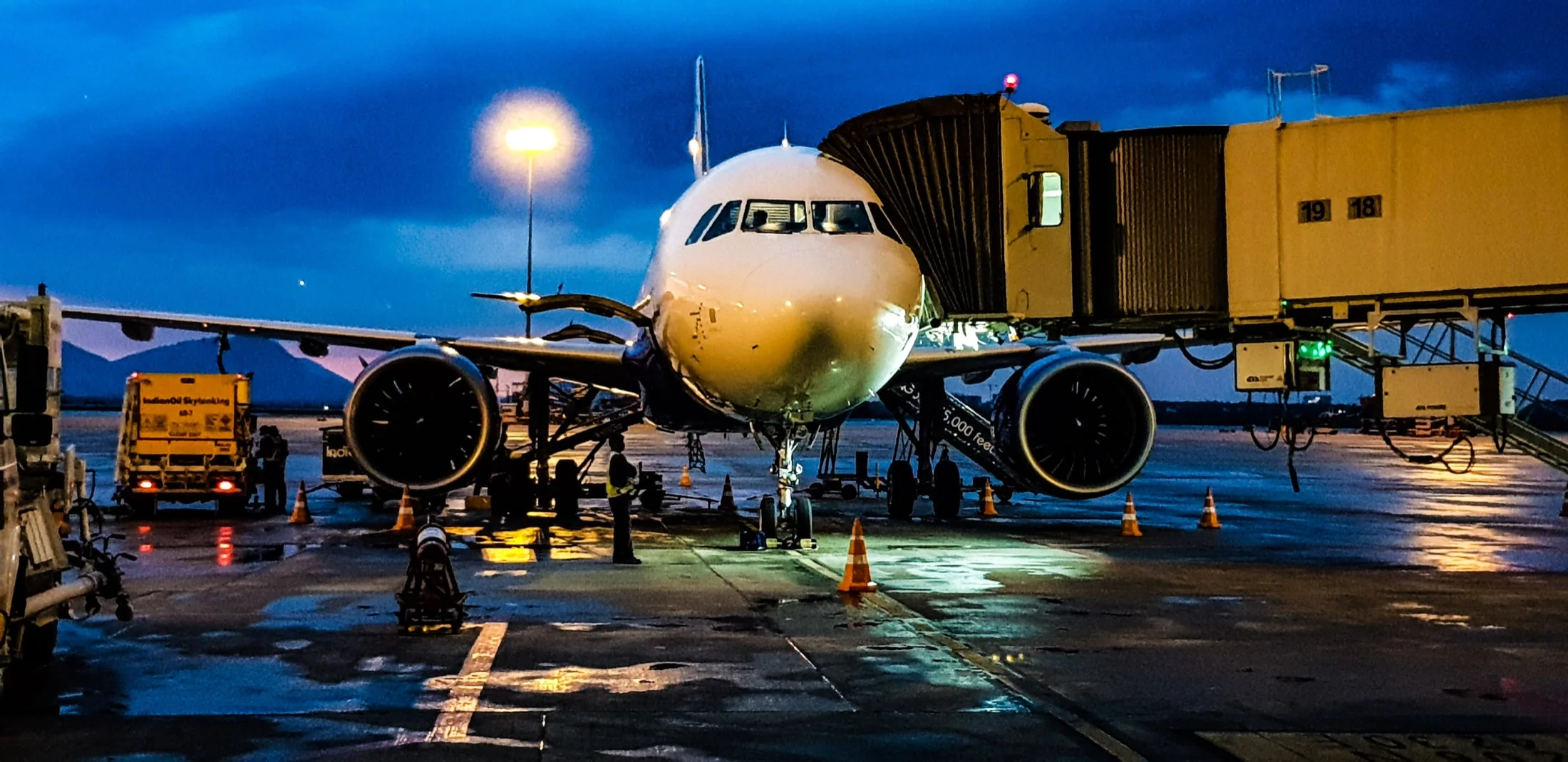

When a pilot presses the rudder pedal to extend the flaps, commands gear extension, or applies the brakes at the end of the runway, it is never their muscular force that moves the control surfaces: it is a column of fluid under very high pressure that transmits their intent, within milliseconds, to actuators distributed throughout the airframe. Aviation hydraulics is this discreet, almost invisible technology that makes flying a modern transport aircraft possible. An A320 hosts three independent circuits; an A380 carries two, supplemented by electrical actuator distribution; a B777 has three; a B787 has reduced the role of hydraulics in favour of more-electric architectures. Yet in every case, hydraulics remains, even in 2026, the backbone of flight control.
For a Part-145 shop pursuing long-haul maintenance, mastery of hydraulic systems marks industrial maturity. Service pressures reach 3 000 psi (about 207 bar) on most fleets, and 5 000 psi (about 345 bar) on the latest generations. At these levels, the slightest seal defect, the slightest particle of contamination, the slightest elastomer ageing can tip a nominally redundant system into a degraded mode. This article offers a technical reading of aviation hydraulics for B1 LWTR personnel (systems mechanic), in the Algerian context and in light of the ANAC Algeria framework.
1. Why hydraulics in aviation: actuators, control surfaces, landing gear, brakes
Hydraulics earned its place in aeronautics for a simple reason: at equivalent mass, a hydraulic actuator delivers considerably higher force than an electrical or pneumatic actuator. Force is the product of pressure and piston area. At 3 000 psi, a cylinder of only 30 cm² already develops nearly 6 tonnes; at 5 000 psi, the same area exceeds 10 tonnes. No competing technology offers such energy density in such a compact volume.
This power is deployed everywhere on the aircraft. On primary flight controls — ailerons, elevators, rudder, spoilers — each surface is actuated by one or more hydraulic cylinders, fed by independent circuits to guarantee the redundancy required by certification. On secondary controls — flaps, leading-edge slats, speed brakes — the same logic applies, with movement speeds modulated by precision servovalves.
The landing gear is one of the most visible consumers. Extension and retraction, bogie rotation, nose-wheel steering, door uplock: all are hydraulically actuated. Wheel brakes, finally, convert hydraulic pressure into braking torque on carbon discs, dissipating more than 100 MJ of kinetic energy during an emergency stop on dry runway. To this list one must add thrust reversers, APU starters on some types, and a host of ancillary functions.
2. Pressures: 3 000 psi (legacy) vs 5 000 psi (A380, recent B787)
For nearly seventy years, the civil aviation standard has been 3 000 psi. This pressure, inherited from 1950s military standards, offered a reasonable trade-off between force, pipework mass and component reliability. Airbus aircraft of the A300/A310/A320/A330/A340 generations, Boeing 737/747/757/767 aircraft, ATRs and almost all regional aircraft operate at this pressure.
The move to 5 000 psi began in the early 2000s on the Airbus A380. The industrial reasoning is clear-cut: for a given force, multiplying pressure by 5/3 reduces piston and pipework cross-section in the same proportion, saving several hundred kilograms across the entire airframe. On a 560-tonne aircraft, that mass saving translates directly into fuel burn, payload and emissions. The Boeing 787 followed in part, as did the Lockheed F-35 and several military programmes.
The flip side of higher pressure is heightened demand on every component. Pipework, generally in TA6V titanium alloy rather than stainless steel, must withstand higher mechanical stress and more severe fatigue cycles. Seals, fittings, pumps — everything is redesigned. Maintenance changes too: tightening torques, allowable leakage tolerances and contamination thresholds are all tightened.
| Hydraulic component | Typical pressure | Maintenance action |
|---|---|---|
| TA6V titanium pipework | 3 000 or 5 000 psi | Visual inspection, dye penetrant if doubt, monitoring of clamp points |
| EDP (Engine Driven Pump) | 3 000 or 5 000 psi | Replacement at flight-hour threshold, flow/pressure check on bench |
| Secondary electric pump | Typically 3 000 psi | Cyclic functional test, motor current draw check |
| Nitrogen-fluid accumulator | 3 000 or 5 000 psi | Nitrogen pre-charge check, bladder replacement per CMM |
| Flight control servovalve | 3 000 or 5 000 psi | Bench test, ultrasonic cleaning, standard exchange on drift |
| Control surface hydraulic actuator | 3 000 or 5 000 psi | External and internal leakage check, seal replacement per CMM |
| Pressurised hydraulic reservoir | 50 to 80 psi (air charge) | Level monitoring, leak test, return filter replacement |
| RAT (Ram Air Turbine) | 3 000 or 5 000 psi output | Periodic deployment ground test, variable-pitch check, pivot lubrication |
| High-pressure filter | Same as circuit | Replacement at calendar interval or on clogging indicator |
| EHA (Electro-Hydrostatic Actuator) | 5 000 psi internal (local loop) | Cockpit BIT, full LRU replacement |
This table is deliberately synthetic. Actual values, exact intervals and replacement criteria are defined in the component manufacturer's Component Maintenance Manuals (CMM), in the aircraft manufacturer's Aircraft Maintenance Manuals (AMM), and declined in each operator's approved maintenance programme.
3. Skydrol fluid: phosphate ester, fire-resistant but aggressive
The history of aviation hydraulic fluid turned a decisive page in the early 1950s. Earlier mineral-oil-based fluids had a flash point compatible with aviation environments but were vulnerable to fire when leaking near a hot source. The industry pivoted to a new chemical family: phosphate esters. First marketed by Monsanto as Skydrol, this fluid has by now become — through antonomasia — the generic term for aviation phosphate ester fluid, even when other brands (HyJet, for instance) are in use.
The great strength of phosphate ester fluid is its fire resistance. Its auto-ignition point sits above 550 °C, and it does not propagate flame when sprayed onto a hot surface. This property, demonstrated by spray tests at 1 100 °C, has been recognised by manufacturers as a major safety asset, particularly for zones close to the engines.
The downside is well known: the fluid is chemically aggressive. It attacks conventional paints, softens certain plastics, damages non-specific elastomer seals. Historical formulations were even hazardous to skin and mucous membranes; modern generations (Skydrol 5, improved Skydrol LD-4, HyJet V) have markedly improved toxicity, but safety data sheets still mandate nitrile gloves, eye protection and proper ventilation when handling. Any leak must be cleaned immediately with specific absorbent wipes, and contaminated painted surfaces must be treated without delay.
Skydrol has saved countless lives through its fire resistance, but it imposes strict discipline on the shop: material compatibility, tool cleanliness, PPE for personnel.
For the mechanic, the golden rule is non-compatibility with mineral oil. Mixing Skydrol with mineral fluid amounts to condemning the circuit: seals degrade within hours, pumps may seize. Every Part-145 shop must enforce strict physical separation of fluids, with markings, colour codes and dedicated tooling.
4. EDP pumps (Engine Driven Pump), electric, hand
The heart of a hydraulic circuit is its pump. It converts mechanical energy (shaft rotation) into hydraulic energy (flow under pressure). In aviation, three main families coexist.
4.1 EDP — Engine Driven Pump
Driven directly from the engine accessory gearbox, EDP pumps are the primary pumps of each circuit whenever the engines are running. They are almost always axial-piston pumps with a tilting swashplate (variable displacement), able to modulate their displacement in real time to maintain constant pressure regardless of flow demand. When an engine stops, the corresponding EDP ceases output; circuit redundancy then takes over.
4.2 Electric pumps
Each circuit has at least one backup electric pump, fed either from the AC bus or from the battery via an inverter. They supply pressure on the ground for maintenance with engines off, and in flight in case of EDP failure. Their flow is typically more modest, sufficient for essential manoeuvres but not for full-performance operation of all functions.
4.3 Hand pumps
On certain configurations, especially for emergency functions (cargo door locking, emergency gear extension, parking brake on smaller aircraft), hand pumps allow pressurisation without external energy. On modern aircraft their use is marginal but they remain a school of humility: a mechanic who works a lever 200 times to reach nominal pressure understands physically what 3 000 psi means.
Pump maintenance follows strict rules. EDP pumps are LRUs (Line Replaceable Units) with limited service life: replacement at a flight-hour or cycle interval defined by the manufacturer, followed by overhaul on a specialised bench. Functional checks cover output pressure, flow at various speeds, acoustic signature, external leakage and internal consumption.
5. Accumulators: energy storage, pressure smoothing
A hydraulic accumulator is a vessel shared between two fluids separated by a moving membrane: hydraulic fluid under pressure on one side, an inert gas (usually nitrogen) on the other. Its function is threefold. It smooths pressure pulsations generated by piston pumps, it stores energy immediately available for demand peaks (spoiler deployment, emergency braking), and it provides an emergency reserve allowing certain critical functions to operate even after the pumps have stopped.
Three architectures dominate: bladder accumulator (elastomer), piston accumulator and diaphragm accumulator. On transport aircraft, the bladder remains the most common solution for main accumulators, with the piston preferred on braking and certain secondary circuits.
Accumulator maintenance hinges on two key operations. The first is the nitrogen pre-charge pressure check, measured on the gas side when the hydraulic circuit is depressurised. Too-low pressure signals a progressive leak and leads to recharging per CMM procedures. The second is periodic bladder replacement, whose service life is limited by elastomer ageing and pressure cycling. A failing bladder mixes nitrogen and fluid, producing bubbles in the circuit and a loss of actuator performance.
6. RAT (Ram Air Turbine): deployable emergency hydraulic generator
The RAT, Ram Air Turbine, is one of aviation safety's finest inventions. It is a small turbine, typically 60 to 100 cm in diameter, folded into a stowage in the airframe (wing underside or fuselage depending on the type), deployable automatically or manually upon simultaneous loss of primary energy sources. Once exposed to the airflow, its blades spin under the relative wind, driving either an electrical generator, a hydraulic pump, or both depending on the configuration.
On most modern transport aircraft, the RAT delivers a hydraulic pressure of 3 000 psi (or 5 000 psi on A380) sufficient to feed essential flight controls and allow a landing. The flow rate is modest, but calibrated to cover the minimum needs of a stabilised approach and touchdown. The pilot also has emergency braking via a dedicated accumulator, providing a finite number of applications before exhaustion.
RAT maintenance is demanding precisely because the equipment is only used in an emergency. A piece of kit that sleeps in its stowage for years must work flawlessly the day it is called upon. Operations include: periodic deployment test (per maintenance programmes, often at C-check), check of the blade variable-pitch mechanism, pivot lubrication, sealing check, bench test of the embedded hydraulic pump. After each test, the RAT is re-stowed, latched and sealed per safing procedures.
7. Contamination: particles, water, chemical degradation
The worst enemy of an aviation hydraulic circuit is neither pressure, nor heat, nor structural ageing: it is fluid contamination. Three families dominate observed in-service failures.
Particulate contamination is the number-one cause of servovalve failure. A 5-micron metal particle, invisible to the naked eye, is enough to scratch a servovalve spool and degrade its precision. Particles originate from pump wear itself, from poorly protected maintenance operations (dust introduced during disassembly), from manufacturing residue inadequately rinsed off new components, and from fragments of aged elastomer. In the Algerian Saharan context, fine airborne dust is a permanent risk during outdoor maintenance.
Water contamination is more insidious. Phosphate ester fluid is hygroscopic: it absorbs atmospheric humidity on contact with air. This dissolved water triggers, over time, a hydrolysis reaction that chemically degrades the fluid, lowers pH, raises total acid number (TAN — Total Acid Number) and attacks metallic components. Beyond a certain threshold, the fluid must be renewed.
Chemical degradation, finally, covers thermal oxidation of the fluid (in hot engine zones), cross-contamination by other fluids (fuel, engine oil, wash water), and progressive decomposition of additives. On some aircraft types, historical incidents have reminded the industry that even a leaky valve between hydraulic circuit and air conditioning can introduce micro-droplets of fluid into the cabin, with toxicological risks monitored by ANAC Algeria locally and by ICAO internationally.
8. Inspections: sampling, particle count, ISO 4406
Hydraulic circuit surveillance relies on periodic fluid sampling, per the procedures of the maintenance programme. Samples are drawn at dedicated points (probes fitted with quick disconnects), into clean bottles, without contact with the outside. The analysis laboratory measures several key parameters.
Particle count classes the fluid per the ISO 4406 standard. The standard expresses cleanliness as three numbers separated by slashes, such as "18/16/13", corresponding respectively to the count of particles above 4, 6 and 14 microns per millilitre. The lower the numbers, the cleaner the fluid. Acceptable thresholds vary by aircraft type and circuit, but a rapid degradation from one mission to the next is always a warning sign.
Water content is measured by Karl Fischer titration and expressed in parts per million (ppm). Acceptable thresholds are of the order of a few thousand ppm for modern fluids. TAN (total acid number), viscosity at 40 °C and 100 °C, dielectric strength and emission spectrometry (which identifies wear metals: iron, copper, aluminium, chromium, tin) complete the picture.
Sampling discipline is itself a craft. A poorly cleaned bottle, an unwiped fitting, a sample drawn in a sandstorm invalidates downstream analysis. For a Part-145 shop, training technicians in sampling cleanliness is as important as the quality of the analytical laboratory.
9. Elastomer seals: ageing, the aggressive Skydrol fluid
The sealing elements of a hydraulic circuit are the silent sentinels of the system. O-rings, V-shaped seals, lip seals, scraper rings — they are scattered by the thousands throughout an aircraft. Their mission is simple in appearance: retain fluid under 3 000 or 5 000 psi, leak-free, at temperatures ranging from −55 °C in high-altitude cruise to +120 °C in hot engine zones, and to do so for thousands of flight hours.
The reference material for direct contact with Skydrol is EPDM (ethylene-propylene-diene monomer), which resists the aggressiveness of phosphate ester fluid. Conversely, nitrile (Buna-N) seals — common in classical industrial applications — are quickly destroyed by Skydrol. The rule is absolute: any seal in contact with Skydrol must be in compatible elastomer, generally EPDM or butyl. Any confusion at reassembly dooms the circuit in short order.
Seal ageing follows several mechanisms. Hardening (loss of elasticity through progressive thermal cross-linking) reduces the seal's ability to absorb micro-movements and thermal variations. Compression set, or loss of height after prolonged squeezing, degrades static sealing. Ozone cracking — less critical in pressurised cabin but real on the ground — weakens the surface of exposed seals. Extrusions, finally, occur when the seal is partially squeezed out of its groove under pressure, particularly at 5 000 psi where groove mechanics must be flawless.
Maintenance takes three forms. Systematic replacement on every component opening, a universal principle in hydraulics. Seal traceability, with lot number and expiry date (elastomers have a limited shelf life, typically a few years away from light and heat). And strict CMM compliance for each component, prescribing the exact seal reference, cover torque and post-reassembly bleed procedure.
10. The role of the B1 LWTR (systems mechanic) — a key trade for AéroNéo
The certified B1 mechanic is the pillar of hydraulic system maintenance. Their Part-66 licence, issued by ANAC Algeria per the EASA-transposed framework, opens the scope of structures, engines and basic mechanical and electrical systems. The LWTR specialisation (Wiring, Test and Repair), although centred on wiring, in practice goes hand in hand with extended systems competency that includes hydraulics.
Concretely, the B1 commands:
- Reading of the aircraft's hydraulic schematics, with standardised symbols (ISO 1219) and ATA codes (ATA 29 — Hydraulic Power).
- Identification of components and their interfaces: pumps, accumulators, reservoirs, servovalves, actuators, heat exchangers.
- Use of ground pressurisation rigs (hydraulic mules) for maintenance with engines off.
- Air-bleed procedures after circuit opening, essential to prevent compressible bubbles that degrade flight-control precision.
- Full-pressure functional tests, recording response times, internal and external leakage, and abnormal noise.
- Safing circuits before intervention: depressurisation, lockout, partial drainage, tagging.
- Fluid management: transfer, filtration, in-situ cleanliness check by patch test, lab sampling.
- Writing job cards and parameter records in the shop's quality system.
For AéroNéo, in pre-launch at Tamanrasset, hydraulic capability will be one of the pillars of the Part-145 programme targeted at ANAC Algeria. This implies concrete investments: calibrated hydraulic benches, ground pressurisation mules, sampling and filtration kits, a clean room for servovalve disassembly, an EPDM seal stock with lot-level traceability, and continuous B1 training on 3 000 and 5 000 psi architectures.
The Saharan climate demands additional precautions. The fine airborne dust forces stricter "in-cell" maintenance protocols than elsewhere: covers on circuit openings, sampling shielded from wind, seal handling in zones isolated from the outside. The thermal swing between night (sometimes 5 °C in winter) and day (up to 45 °C in summer) stresses elastomers and fluids more than in temperate climates. Yet what constitutes a constraint is also an asset: mastering hydraulics in this context means ultimately mastering maintenance in all operating environments.
Aviation hydraulics is an old art that remains fully current. It has carried generations of aircraft, from Concorde to the A380, and continues — despite the rise of electric actuation — to transmit the essence of flight intent to the control surfaces. For the young Algerian aerospace industry, it is a school of precision, cleanliness and discipline. For a shop like AéroNéo, it is a silent promise: that on every flight the column of fluid under 5 000 psi will faithfully respond to the pilot's hand, without a leak, without a particle, without a forgotten seal.