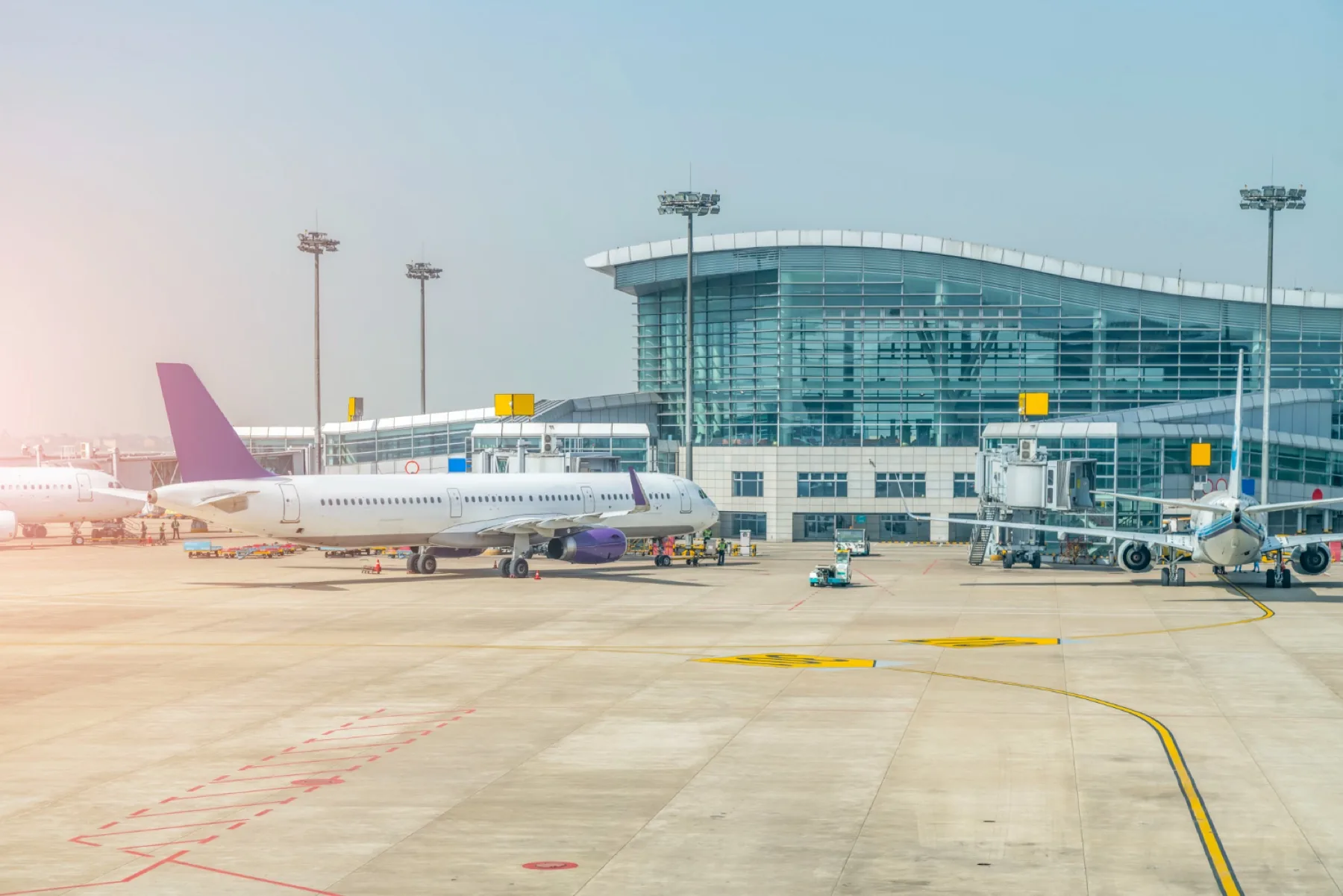

Algeria's aerospace ecosystem cannot be reduced to a recent infrastructure push or an isolated ambition. It rests on six decades of patient institution-building, on regulatory authorities sized to international standards and on human capital trained in elite schools. From the National Civil Aviation Authority (ANAC) to the Algerian Space Agency (ASAL), from Algiers' National Polytechnic School (ENP) to the Aeronautics and Space Studies Institute of Blida 1 (IAES), Algeria today has an aerospace backbone that is rare on the African continent.
The AéroNéo project, in pre-launch phase at Tafraoui, fits within this mature ecosystem. Before describing its ambition, we must take the measure of the foundation that makes it possible.
Aerospace Algeria: six decades of institutional investment
From independence onward, Algeria chose a sovereign aviation policy, integrating simultaneously regulatory mastery, military aviation industry, higher engineering education and, later, space ambitions. This long-term strategy produced an ecosystem organised around three pillars: a regulatory authority aligned with international standards, a high-level university training apparatus, and an industrial and research fabric that mobilises several regions of the country.
This foundation, often unknown outside the country's borders, makes Algeria a structurally prepared host for high-value-added activities such as heavy maintenance, passenger-to-freighter conversion, aircraft recycling and Part-66 training.
ANAC: the National Civil Aviation Authority, guarantor of compliance
The ANAC (National Civil Aviation Authority) is the regulatory pillar of the entire edifice. Reporting to the ministry in charge of transport, it carries out the safety and security mission of Algerian civil aviation, in compliance with the international conventions to which Algeria is a party.
ANAC's core missions cover:
- certification of maintenance, production and training organisations;
- issuance and follow-up of licences for technical flight and cabin crew;
- approval of aeronautical mechanics and technicians;
- oversight of airworthiness for aircraft registered in Algeria;
- development and updating of Algerian technical regulations.
ANAC maintains continuous dialogue with the International Civil Aviation Organization (ICAO) and the International Air Transport Association (IATA), and is regularly audited under universal oversight programmes. These audits structure the continuous improvement of the Algerian system and guarantee that approvals issued in Algiers carry weight across the ICAO area.
ANAC is not a peripheral authority: it is what makes a competitive MRO ecosystem possible — or not — by delivering Part-145 approvals, supervising Part-21 organisations and steering Part-66 continuing training programmes.
ASAL: the Algerian Space Agency and the conquest of orbit
Created by decree in 2002, the Algerian Space Agency (ASAL) is the public body in charge of national space policy. It steers the development, launch and operation of Algerian satellites, and coordinates research, training and international cooperation programmes in the space domain.
ASAL's trajectory is carried by a series of successive achievements. The first Algerian satellite, Alsat-1, launched in 2002, opened an uninterrupted Algerian presence in low Earth orbit. Subsequent missions broadened the portfolio to high-resolution Earth observation and telecommunications.
Algerian satellites in orbit
| Satellite | Launch year | Primary mission | Orbit |
|---|---|---|---|
| Alsat-1 | 2002 | Earth observation — technology demonstration | Sun-synchronous LEO |
| Alsat-2A | 2010 | High-resolution observation — mapping, environment | Sun-synchronous LEO |
| Alsat-1B | 2016 | Medium-resolution observation — agriculture, resources | Sun-synchronous LEO |
| Alsat-2B | 2016 | High-resolution observation — second operational eye | Sun-synchronous LEO |
| AlSat-Nano | 2016 | CubeSat — student technology demonstration | LEO |
| AlComSat-1 | 2017 | Telecommunications — TV broadcasting, broadband services | GEO 24.8° West |
Beyond a simple list of platforms, ASAL operates several specialised centres: the Arzew Space Techniques Centre, the Oran Satellite Development Centre, the Space Applications Centre and the Telecommunications Systems Operation Centre. These centres form an integrated apparatus, from ground segment to image processing, including payload design and integration.
For civil aeronautics, this space capital is far from anecdotal. Satellite geomatics feed airport cartography, air route planning, environmental surveillance of storage and recycling sites, and climatic analysis of industrial basins. The Algerian space ecosystem structurally reinforces the aeronautical ecosystem.
The National Polytechnic School of Algiers: forging engineers
Founded in 1925 and deeply restructured after independence, the National Polytechnic School of Algiers (ENP) is the country's reference engineering school. Its departments of mechanical engineering, materials engineering, industrial engineering and electrical engineering train each year cohorts selected by national competition from among the country's best baccalaureate holders.
ENP maintains international academic partnerships that allow its students to undertake research stays in European, North American and Asian laboratories. Double degrees and joint doctoral schools guarantee a circulation of knowledge and permanent updating on advanced techniques.
For Algerian aeronautical industry, ENP is a reservoir of engineers prepared in fluid mechanics, materials resistance, embedded systems and production methods. Heavy maintenance chains, P2F conversion workshops and AFRA recycling programmes rely on exactly this profile.
The Aeronautics and Space Studies Institute of Blida 1
The Aeronautics and Space Studies Institute (IAES) of Saad Dahlab University in Blida 1 is the Algerian university establishment dedicated exclusively to aerospace disciplines. It delivers bachelor's, master's and doctoral degrees in:
- aeronautics — propulsion, aerodynamics, structures;
- air navigation and operations;
- aircraft maintenance;
- space studies — orbital systems, remote sensing.
IAES has laboratories for flight mechanics, simulators, teaching wind tunnels and practical workshops on real airframes. Its teacher-researchers publish regularly in international specialised journals and collaborate with ASAL centres and national industrial partners.
Saad Dahlab University in Blida: regional aeronautical hub
Saad Dahlab University in Blida 1, which hosts IAES, has become a genuine regional aeronautical hub. Located near major aeronautical infrastructure, it benefits from a proximity ecosystem that facilitates internships, end-of-studies projects and industrial theses.
Beyond IAES, several other university faculties contribute to the ecosystem: materials science, mechanical engineering, civil engineering, applied mathematics. This interdisciplinarity is precious for contemporary aerospace topics, which simultaneously mobilise metallurgy, composites chemistry, embedded computing and numerical modelling.
Technical schools and the B1 / B2 pathway
The excellence of an aeronautical ecosystem is not measured only by its engineers: it rests just as much on its technicians. Algeria has a structured technical training apparatus, of which the Tafraoui Technical School (ETRS) is a historic link. This school trains technicians in aircraft maintenance, airframe mechanics, avionics systems and aeronautical electricity.
Algerian technical pathways prepare for international qualifications:
- Category B1 — certifying technician for mechanical, structural and mechanical systems of the aircraft;
- Category B2 — certifying technician for avionics, electrical and electronic systems;
- Category A — line maintenance technician for simple tasks;
- Category C — base maintenance certifier on large aircraft.
Other establishments complete this apparatus in the regions of Constantine, Oran, Blida and within military structures. This density of technical training makes it possible to envisage heavy maintenance chains nourished by qualified local labour.
The industrial fabric: Constantine, Oran, Tiaret, Blida
Algerian aeronautics is not concentrated in a single point. Several industrial basins structure the territory:
- Algiers and Blida region — university concentration, research, central operations, major airport infrastructure;
- Oran and Tafraoui region — historic technical training, western airport platform, Mediterranean openness, future AéroNéo site;
- Constantine region — scientific university hub, mechanical and electronic industries, structuring regional airport;
- Tiaret region — emerging basin for air transport and freight, growing infrastructure, available airport land.
This territorial distribution is a strategic asset: it avoids excessive concentration on a single site, allows operational resilience and offers diversified employment basins.
Algerian civil aviation and the airport network
Algeria has several dozen aerodromes open to public air traffic, of which around thirty are commercial airports. The major platforms — Algiers, Oran, Constantine, Annaba, Tlemcen, Tamanrasset, Hassi Messaoud, Ouargla — cover the entire territory, from the Mediterranean coast to the Great South.
The National Air Navigation Establishment (ENNA) provides air navigation services and operates aerodromes. Alongside ANAC, ENNA is a key player in the institutional apparatus.
Algerian airspace, one of the most extensive in Africa, is managed in accordance with ICAO standards, with regional control centres and continuously modernised radar and radionavigation coverage. This technical base is indispensable for the development of high-value aeronautical industrial activities.
The Algerian aeronautical diaspora
The Algerian ecosystem does not stop at the country's borders. Thousands of engineers and technicians trained at ENP, IAES, Saad Dahlab University or in technical schools work today in the world's major aeronautical centres — France, United Kingdom, Germany, United States, Canada, United Arab Emirates, Saudi Arabia, Singapore. These professionals hold positions in design offices, programme management, production, maintenance and research within leading organisations.
This diaspora represents strategic human capital. It constitutes at once a pool of possible returns, an expertise network mobilisable at distance and a natural channel of technology transfer. Several governmental and associative initiatives work to structure these links, organise short-term missions and foster co-investment in industrial projects in Algeria.
The AéroNéo project: fitting into the ecosystem
It is in this institutional and human landscape that the AéroNéo project, in pre-launch phase at Tafraoui, finds its place. AéroNéo is not an off-ground project: it explicitly relies on ANAC for its approvals, on IAES and ENP for its engineering sourcing, on ETRS and regional technical schools for its technicians, and on the diaspora for its technical leadership.
AéroNéo's ambitions are organised around several complementary trades:
- Part-145 heavy maintenance — C and D checks on wide-body aircraft;
- Passenger-to-freighter conversion (P2F) — industrial repositioning of high residual value airframes;
- Long-term storage — Saharan dry climate preservation;
- AFRA recycling — aeronautical dismantling and circular economy;
- Part-66 B1 / B2 training — academic partnerships for skills upgrading.
The objective of creating at least 200 direct qualified jobs, complemented by several hundred indirect jobs across logistics, subcontracting and services, relies on the immediate availability of local skills. None of these trades requires massive importation of foreign labour: the Algerian ecosystem already provides the profiles.
Outlook: making Algeria an aerospace hub for Africa
The African continent represents the aeronautical market with the strongest projected growth in the coming decades. The African commercial fleet will double according to reference projections, and the needs for maintenance, conversion, storage, recycling and training will follow this trajectory. The question is not whether an African MRO hub will emerge, but where.
Algeria objectively gathers the success factors:
- a regulatory authority, ANAC, aligned with ICAO standards;
- a proven university and technical training apparatus;
- a Saharan climate favourable to storage and preservation;
- a geographical position at the Europe – Mediterranean – Africa – Middle East crossroads;
- available land and underutilised airport infrastructure;
- a diaspora of internationally renowned aeronautical engineers;
- an active space programme that anchors aerospace culture.
The ANAC – ASAL – ENP – IAES – Saad Dahlab University – ETRS – diaspora ecosystem forms a rare backbone. AéroNéo, at Tafraoui, proposes to draw maximum industrial momentum from it, fitting fully into this patient construction of six decades.
Six decades of institutional excellence are not nostalgia: they are the foundations of an aerospace future being written now.